
VASCULAR CENTER
Vascular Screening
Preventative Health Screening Program
Understanding your personal health risks and changing your lifestyle habits to improve your health should be a priority for everyone. Prevention screenings provide invaluable information into the health of your vascular system – providing an opportunity for treatment before a serious or even life threatening health issue arises.
Oregon Surgical Specialists on-site laboratory offers a full array of non-invasive diagnostic services as well as Preventive Health Screenings for those who may be at risk due to family history or lifestyle choices. The Preventive Health Screenings assist patients in identifying potentially life threatening conditions before they become an issue.
After your screening, a board certified physician will review the results. If any abnormalities are detected you will receive a report to share with your personal physician.
Appointments can be made by calling (541) 930-8900. No physician referral is required for any of our Preventive Health screenings. Screenings are not covered by insurance. They are meant to provide important information for you to personally manage your own prevention plan.
Prevention and early detection through a simple vascular health screening is key to your vascular health.
Our Preventive Health Screening Program covers:
Stroke Prevention & Carotid Artery Screening
Over 700,000 Americans suffer strokes each year. A significant number of patients die when they have a stroke; a larger number are left disabled with paralysis. A large number of strokes can be prevented with proper diagnosis and treatment.
Carotid Artery Screening is very important in detecting that the carotid artery has not narrowed. A narrowed carotid artery is caused by plaque build-up inside the artery walls. If the artery becomes too narrow, blood flow to the brain becomes compromised, potentially causing a stroke.
Who is at risk for carotid artery disease?
Anyone with:
- A history of vascular or cardiovascular disease
- A history of smoking
- High blood pressure
- High cholesterol
What are the warning symptoms for a stroke?
- One-sided weakness or numbness (arm, leg, and/or face)
- Temporary blindness of one eye
- Difficulty speaking (inability to talk, or slurred speech)
What should your screening entail?
If you answered yes to any of the risk factors or warning symptoms, you should be evaluated either by a medical provider at our facility or by your primary care provider.
Your screening should include:
1. A medical history: A complete history should be taken, including symptoms such as numbness, weakness, vision problems or anything else you’ve noticed. Also included in the medical history are any other medical problems you are having, such as diabetes or high blood pressure.
2. A physical exam: In patients with no warning symptoms, plaque may be detected by listening to your neck with a stethoscope. An abnormal sound – a bruit – suggests the possibility of plaque buildup.
3. Ultrasound exam: Further evaluation is simple and painless. An ultrasound exam can accurately determine the severity of narrowing in the carotid artery.
Why should I be screened?
The risk of stroke is high for someone suffering from carotid artery blockage. This blockage can often times go undetected, with no symptoms. Simply put, screening can save your life.
Peripheral Artery Screening
Does your leg muscle cramp after walking just a short distance? Leg pain may mean you have peripheral artery disease. The disease occurs when your arteries can’t bring enough blood to your leg and foot muscles.
Circulation is the constant flow of blood between the heart and the rest of the body. Arteries carry oxygen-rich blood throughout the body. Veins return blood to the heart. Over time, artery walls may thicken with plaque (a fatlike substance). As plaque builds up, the arteries narrow and peripheral artery disease can occur.
Who is at risk for peripheral artery disease?
Anyone with:
- A history of vascular or cardiovascular disease
- A history of smoking
- High blood pressure
- High cholesterol
What are the warning symptoms for peripheral artery disease?
- Pain in the hip, thigh or calf area upon walking and relief when resting
- Foot pain at rest
- Non-healing leg and foot ulcers
Why should I be screened?
Peripheral artery disease (or atherosclerosis) can affect your lifestyle, making you less and less active because of foot and leg pain. As the disease progresses, non-healing ulcers can develop, and the eventual loss of limb can occur in a more advanced stage.
What should your screening entail?
If you answered yes to any of the risk factors or warning symptoms, you should be evaluated either by a medical provider at our facility or by your primary care provider.
Your screening should include:
1. A medical history and physical exam: A complete history should be taken, including symptoms such as calf or foot pain. Also included in the medical history are any other medical problems you are having, such as diabetes or high blood pressure. A physical exam should be completed, including having your blood pressure taken and listening to pulses in your legs and feet.
2. Ultrasound exam: These tests use sound waves to measure blood flow. The test will measure the force of the blood flowing in your leg arteries. This helps to locate narrowed or blocked arteries.
Abdominal Aortic Aneurysm Screening
What is an abdominal aortic aneurysm (AAA)?
An abdominal aortic aneurysm is a weakening in the wall of the aorta. The aorta is the largest blood vessel in the body. It forms at the heart and runs through the chest and abdomen where it divides into major arteries. It supplies blood to the organs of the body along the way.
AAA forms when the walls of the aorta weaken and allows the aorta to expand like a balloon. As it swells, the walls of the aorta may get so thin it can eventually rupture (or burst). A rupture is life threatening. High blood pressure can speed up this process.
The weakening can be caused by accumulation or build up of fatty deposits, arteriosclerosis (hardening of the arteries), cigarette smoking, high blood pressure and traumatic injury.
Who is at risk for AAA?
Anyone who:
- Has a family history of AAA
- Has high blood pressure
- Has a history of smoking
- Has been diagnosed with Atherosclerosis
- Is over the age of 55
What are the symptoms for AAA?
- Abdominal pain
- Abdominal tenderness
- GI symptoms such as nausea or weight loss
- Low back pain
Why should I be screened?
An abdominal aortic aneurysm is silent but deadly. Three out of four people do not have symptoms. If an aneurysm ruptures, the likelihood of not surviving is 75%. Of those 75% that do not survive, 50% die prior to arriving at the hospital, 25% die after they arrive at the hospital.
What should your screening entail?
If you answered yes to any of the risk factors, or have any of the symptoms on the symptoms list, you should be evaluated either by a medical provider at our facility or by your primary care provider.
Your screening should include:
1. A medical history and physical exam: A complete history should be taken, including symptoms such as abdominal pain or tenderness. Also included in the medical history are any other medical problems you are having, such as diabetes or high blood pressure. A physical exam, including an examination of your abdomen should be performed.
2. Ultrasound exam: An ultrasound test uses sound waves to make images of your aorta and nearby blood vessels. This test allows the size of your aneurysm to be measured. The test is painless and doesn’t take long. Ultrasound gel is rubbed on the skin over your stomach. Next, a sensor is moved back and forth over your abdomen. An image of your aorta can then be seen on a screen.
AAA Screening Medicare Benefit
MEDICARE PATIENTS: You may be eligible for a free one-time Abdominal Aortic Aneurysm screening as part of your “Welcome to Medicare” physical.
Medicare recognizes the importance of vascular health and now offers a free, one-time, ultrasound screening benefit to check for an Abdominal Aortic Aneurysm (AAA). To qualify, the screening must be part of your “Welcome to Medicare Physical Exam” (which was formally called the “Initial Preventive Physical Exam,” or IPPE) and must be conducted within the first six months of enrollment in Medicare. The provider who performs your “Welcome to Medicare Physical Exam” is the only person who can order the free AAA screening test for you.
The AAA screening is available to men who have smoked at least 100 cigarettes, and men and women with a family history of AAA. Nearly 200,000 people in the United States are diagnosed with AAA annually. This vascular condition can be life threatening but can be safely treated or cured with early diagnosis.
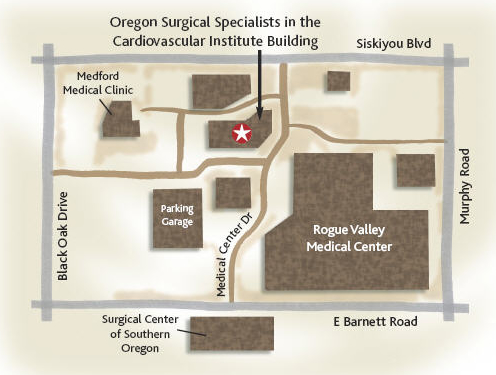
VASCULAR LAB
Oregon Surgical Specialists, PC
520 Medical Center Drive, Suite 300
Medford, OR 97504
Preventive Health Screening Hours
Monday – Friday, 8 a.m. – 5 p.m.
(541) 930-8900